Reform is a movement, not a moment.

Complex challenges rarely fail for want of another recommendation. They fail when evidence is disconnected from decisions, strategy from financing, technology from users, and reform from the institutions that must own it.

From concept start to delivery state

We begin with the problem as it exists — not with a pre-packaged solution.

Every transformation starts somewhere different. A ministry may have strong policy but weak implementation capacity. A programme may have funding but no unclear delivery model. An institution system may have trusted relationships but no data culture. A city may have the infrastructure it needs but an inaccessible business model. A public institution may generate large volumes of data and still struggle to turn them into decisions.

CURRENT STATE

  • Fragmented evidence
  • Limited user insights
  • Disconnected actors
  • Weak data culture
  • Policy-implementation gaps
  • Financing constraints
  • Siloed data
  • Limited accountability

DESIGN STATE

  • Decision-grade evidence
  • Clear priorities
  • Co-owned solution architecture
  • Data financing and data culture
  • An implementable operating model
  • Evidence services and systems
  • Measurable outcomes
  • Capacity to sustain change
01

Where are you now?

What is actually happening across policy, institutions, people, processes, finance, systems, data, technology and service delivery?

02

Where do you need to be?

What would a credible target state look like for users, decision-makers, institutions, finance and accountability?

03

What has to change to get there?

Which policies, processes, capabilities, operating arrangements, technologies, institutions and behaviours must move — and in what sequence?

Define the decision first

Define the decision before designing the work.

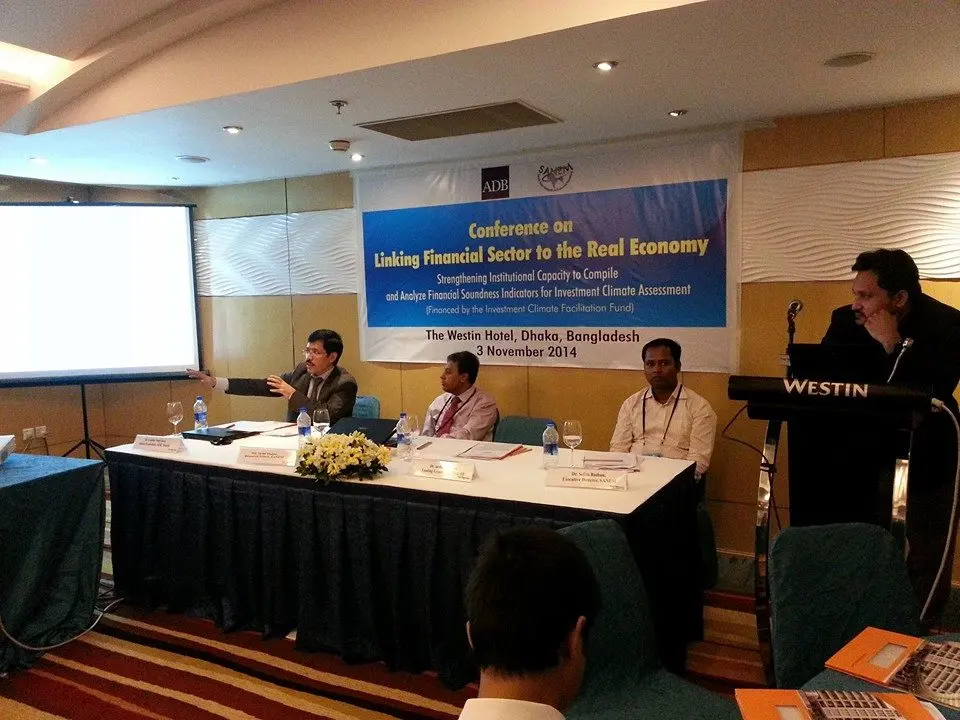
Stakeholders working through a problem at a policy workshop
  • The problem or opportunity
  • The decision that must be enabled
  • The people affected by the decision
  • The relevant outcomes
  • Performance expectations
  • Implementation dependencies
  • Available evidence and data
  • Funding and resource constraints
  • Risks and dependencies
  • The time horizon
  • What success would look like
  • How the client will be able to manage independently when the engagement ends
THE PATHWAY

Six Movements of Reform

From diagnosis to durable institutional capability. The movements are shown in order because a roadmap must be understandable — but evidence can change the design, a plan can invalidate an assumption, and implementation can expose an institutional constraint. Feedback and adaptation are built in from the start.

Sense & Diagnose

Understand the system before moving to improve. A credible problem is rarely the whole problem. We run a current-state diagnostic that identifies how policies, institutions, investments, markets, people, technology, finance, infrastructure, data and behaviours interact — separating what drives the problem from what is merely a symptom, and locating where intervention creates the greatest leverage.

What you receive A current-state diagnostic and readiness assessment: what is driving the problem, what is only a symptom, and where to intervene. Related capability: Policy, Economics & Strategy Advisory

Case Study Example — Ghana Subsoil Fertiliser: Ghana's soil health crisis wasn't about fertiliser availability — it was about the entire system: subsidy design, distribution channels, farmer trust, soil testing, data flows, and last-mile logistics. IP3 mapped the full value chain to identify where intervention would create the greatest leverage.
  • Client QuestionWhat is really preventing the organisation, programme, market or citizen from reaching the intended outcome?
  • What We DeliverCurrent-State Diagnostic & Transformation Readiness
  • Deliverable Map & MatrixInstitutional evidence, process and digital maturity diagnostic.

Build Intelligence

Turn evidence into decisions, not just reports. Not every evidence gap requires another large study. We identify what must be known to change a decision, combine existing evidence with new primary research where it is needed, and connect quantitative analysis to institutional, behavioural and user insight. Evidence is then translated into a practical target state.

What you receive An evidence base and target-state blueprint: the data and analysis your decision needs, linked to a practical target state. Related capability: Data, Digital & Responsible AI

Case Study Example — Technology Adoption in Low-Land Holdings: For a multi-country initiative, research on farm design and tool improvements, agronomics and financing, market, user and gender dynamics, extension models, and behaviour change was woven into a single, actionable strategy.
  • Client QuestionWhat do we need to know to act, and differently?
  • What We DeliverEvidence & Target State Blueprint
  • Deliverable Map & MatrixDecision-grade data and service analytics linked to a practical target state.

Co-Design & Test

Turn insight into a credible, testable system. This is where analysis becomes actionable architecture. Policies, programmes, operating models, digital systems, regulations, financial mechanisms and services are designed together with the institutions and people who must use them — then prototyped and tested before anyone commits institutional resources.

What you receive A target solution architecture (operating model, service blueprint and data architecture), prototyped and tested before you commit resources. Related capability: Program & Project Design

Case Study Example — Malawi Farmer Transformation & Digital Lending: IP3 worked with Malawi's government, financial sector, and NGOs to co-design a farmer transformation and digital lending system. The design integrated land tenure, credit scoring, extension services, market access, and mobile money — tested with real farmers and financial institutions before national rollout.
  • Client QuestionWhat solution can we validate with real institutions, users, finance and political constraints?
  • What We DeliverTarget Solution Architecture
  • Deliverable Map & MatrixTarget operating model, service blueprint and data architecture, prototyped.

Mobilise

A good design means nothing if it isn't resourced. Mobilisation is broader than financing. It means aligning the mandate, leadership, stakeholders, people, capabilities, technology, data, financing and implementation resources needed to move from design into operating reality — and getting early, client-facing proof of programme and leadership teams rather than handed to a downstream consultant.

What you receive A mobilisation and implementation-readiness plan covering mandate alignment, stakeholders and financing. Related capability: Development Finance & Private Capital Mobilization

Case Study Example — Ghana Subsoil Early Warning System: IP3 designed a decision-support tool for the Ministry of Agriculture. We mapped stakeholder roles, financing pathways, data governance, and change management — ensuring the system could be owned and sustained by Ghanaian institutions, not just delivered as a technical product.
  • Client QuestionWhat must be aligned, funded, and resourced to move from design to implementation in practice?
  • What We DeliverMobilisation & Implementation Readiness Plan
  • Deliverable Map & MatrixMandate alignment, stakeholder mapping and financing plan.

Implement & Transfer

Implementation is part of consulting — not what happens after consulting. We work alongside clients as strategy becomes operating reality, tracking change management and stakeholder engagement as implementation disciplines rather than communication exercises. The objective is not consultant dependency — it is institutional capability, transferred deliberately as the work proceeds.

What you receive An operational delivery system and a capability-transfer plan, so your own teams can run what is built. Related capability: Institutions, Governance & Delivery

Case Study Example — Municipal Finance & Institutional Transformation: IP3 supported a municipal finance transformation, embedding change management, stakeholder engagement, and capacity transfer into every phase. The result was a system owned and operated by local institutions, not dependent on external consultants.
  • Client QuestionHow do we build our own policy programme, service or system and sustain it ourselves?
  • What We DeliverOperational Delivery System & Capability Transfer Plan
  • Deliverable Map & MatrixProcess redesign, partner rollout and skills transfer capability tracking.

Learn & Scale

Measure to drive change, not justify it. Transformation evaluation asks what happened after an intervention ends. Our M&E & Approach asks what the decision-makers need to know while implementation is still underway — so course corrections can be made and lessons applied before implementation closes, so evidence can change the programme rather than merely report on it.

What you receive A monitoring, adaptation and scale framework that shows whether to adapt, stop, institutionalise or scale. Related capability: Monitoring, Evaluation, Learning & Impact

Case Study Example — Policy Reform, Trade & LDC Graduation: IP3 supported a country's transition from LDC status, designing M&E frameworks that tracked trade, investment, and institutional capacity in real time — enabling course corrections before graduation deadlines.
  • Client QuestionWhat evidence would tell us whether to adapt, stop, institutionalise or scale?
  • What We DeliverM&E & Adaptation & Scale Architecture
  • Deliverable Map & MatrixLive dashboards and performance triggers linking feedback and scale.
The standard inside every phase

Six commitments that make the pathway IP3.

The pathway describes the sequence. These describe the standard we hold ourselves to inside it.

01

Evidence Before Assumption

Decisions are only as good as the evidence they rest on. We do not start with solutions. We start with the problem as it exists, and let the evidence determine the pathway.

02

System Before Symptoms

Every policy problem is part of a larger system. We address root causes, not symptoms. Connected problems require connected solutions. We map the full system — institutions, markets, technology, users and behaviours — before defining the intervention.

03

Co-Creation, Not Prescription

A solution imposed is a solution resisted. We design with government, markets, communities and users. The best solutions emerge from the people who must own and sustain them.

04

Test Before Scale

Designing at scale is designing blind. We prototype, test, and iterate. The pathway is built on evidence, not assumption. What works in pilot informs what works at scale.

05

Implementation Alongside Strategy

Policy, research, finance, digital design, and delivery are not separate phases. They are one continuous process. We design with the end in mind, and stay with the client through implementation and adaptation.

06

Capability Beyond the Engagement

Our job is to make ourselves unnecessary. The ultimate measure of success is not the report we deliver, but the capability we leave behind. We build institutional capacity so clients can sustain change after the engagement.

Design with the people who live the system

Policy becomes real through people’s experience.

We combine what the data measures with what people experience. Even the most well-designed policies fail when they don't account for the lived experience of the people who must implement and use them. Technical correctness alone is insufficient without human-centered service design connecting people, process, data, tech, and finance.

PeopleProcessDataTechFinanceUsersCitizensInstitutions
  • Listen. Lived experience, needs, behaviours, frustrations, incentives and barriers.
  • Map. Value chain analysis, service interactions, processes and friction points.
  • Co-Design. Design ideas with users, client teams and technical stakeholders.
  • Prototype. Build the smallest useful representation of the policy, service or model.
  • Test. Gather evidence, feedback and evidence.
  • Iterate. Keep what works. Change what doesn't.
Keep what works. Change what doesn't.
01Listen
02Map
03Co-Design
04Prototype
05Test
06Iterate
Disciplined rigour · flexible application

The pathway is consistent. The toolkit changes.

We do not force every problem into one template. Methods are selected and combined according to the decision, the sector, the evidence available and the capacity to implement.

01

Actionable Architecture

Turn complexity and evidence into clarity that can be implemented.

02

Policy Solution Architecture

Design a coherent blueprint for connected problems.

03

Translational Policy Model

Bridge the gap between research, evidence and implementation — from academic insight to operational reality.

04

IP3 Impact Logic

Link inputs, activities, outputs, outcomes and impact in a clear, testable chain.

05

Dynamic Network Model

Assemble interdisciplinary teams around specific challenges, scaling capacity to the work and contracting it back when the work is done.

06

Technology as Enabler

Technology is an enabler. Governance and inclusion determine whether it creates value. Our approach asks not only whether something can be digitised, but whether it should be — and for whom.

Bringing both sides, not just one

Transformation cannot be outsourced.

True transformation happens when external expertise meets internal knowledge in genuine partnership.

IP3 provides

  • Institutional diagnostics
  • Independent analysis
  • Technical and financial
  • Research and modelling
  • Facilitation
  • Technical design
  • Implementation support
  • Change management
  • Quality assurance
+

Client teams provide

  • Institutional intelligence
  • Decision authority
  • Operational knowledge
  • User and citizen insight
  • Political will
  • Budget and resources
  • Implementation ownership
  • Organisational learning

Together we — Leaders and practitioners partnering to design, test, implement, monitor, learn, build capability, and achieve long-term sustainability.

From consulting output to client capability

The objective is not a better report. It is a system better able to act.

This is the difference between producing analysis and building actionable architecture.

  • From fragmented understanding of the problem→Decision-grade view of the system and its root causes
  • From recommendations without institutional ownership→Solution architecture with clear accountabilities
  • From technology-led digitisation→Digitally-enabled, governed and inclusive digital transformation
  • From a project plan→Sequenced implementation roadmap with resources, risks and decision gates
  • From external expertise carrying the reform→Client capability able to operate and adapt it
  • From monitoring for reporting→Evidence for management, learning and course correction
  • From a successful pilot→Evidence-based decision about whether and how to scale
  • From producing analysis→Building actionable architecture
Why the IP3 approach is different

Why the IP3 approach is different

The principles that distinguish our methodology from conventional consulting.

Delivery Pathway

No strategy without a pathway to delivery.

Institutional Ownership

No digital tool without institutional ownership.

Implementation Question

No policy recommendation without an implementation question.

Cost, Benefit & Risk

No major investment without understanding cost, benefits and risk.

People-Centered

No transformation without the people who must deliver it.

Evidence Before Scale

No scale before evidence.

Timely Evaluation

No evaluation that arrives too late to improve the programme.

Actionable Architecture

This is the difference between producing analysis and building actionable architecture.

Built Different

Research that changes decisions. Architecture that can be implemented. Technology designed around people. Institutions equipped to sustain change.

Beyond the recommendation

From advice to practical reality

A recommendation is only one possible output across our transformation delivery.

01

A decision-grade diagnostic

Clear evidence of the root problem, risks, constraints and leverage points.

02

A target-state blueprint

A shared vision of what the future policy, system or programme should look like.

03

A tested solution

A prototype, pilot, policy or model that has been validated with users and institutions.

04

An implementation roadmap

Sequenced actions, responsibilities, resources and dependencies with decision gates.

05

A business & governance case

Costs, benefits, financing options, risks, institutional and governance arrangements.

06

A policy or regulation

Drafted, costed, consulted and ready for adoption or amendment.

07

A data & digital architecture

A system design, data model, governance framework, platform, standards, digital services and monitoring.

08

A change & capability plan

The people, skills and institutional change required to sustain implementation.

09

A M&E/L&A

A monitoring, evaluation and learning framework with decision triggers.

10

A pathway to scale

A decision framework for scaling, adaptation or stopping, informed by evidence.

Start a conversation with IP3

Where would your engagement start?

Most conversations begin with a diagnostic question — what is actually driving this, and what would have to change. Tell us where you are and we will suggest the right entry point.

Start the conversation

This form opens a draft in your email app. IP3 receives it only after you press Send there. Your details are used only to reply to your enquiry.